A new chapter for our Legendary safari experiences
Legendary Expeditions and Chem Chem Safari have joined the Auberge Collection, uniting nine exceptional properties across Tanzania’s most iconic wildlife destinations under one visionary new brand: Auberge Safari.
For travelers and trade partners, this means the same True. Wild. Free experience you know and trust, now seamlessly connected in an unrivaled portfolio of luxury safari camps and lodges.
As Auberge Safari takes flight, Legendary Expeditions is stepping into a new role as your premier partner for Auberge Safari journeys, crafting extraordinary experiences across northern Tanzania — and beyond. Return on June 1, 2026 to find out more
My Great Migration journey began in what the Maasai call 'Siringet' — the endless plains. Standing amid the vast wilderness of the Serengeti National Park, I finally understood why this UNESCO World Heritage Site earned such reverence. Before me stretched 14,763 square kilometers of sprawling savannas and acacia woodland, shaped by volcanic forces and shifting continents over millions of years.
My guide explained that this ecosystem is home to one of the world's largest concentrations of hoofed mammals — and fittingly, one of Africa's highest populations of big cats. The circle of life plays out here daily.
The thundering of millions of hooves
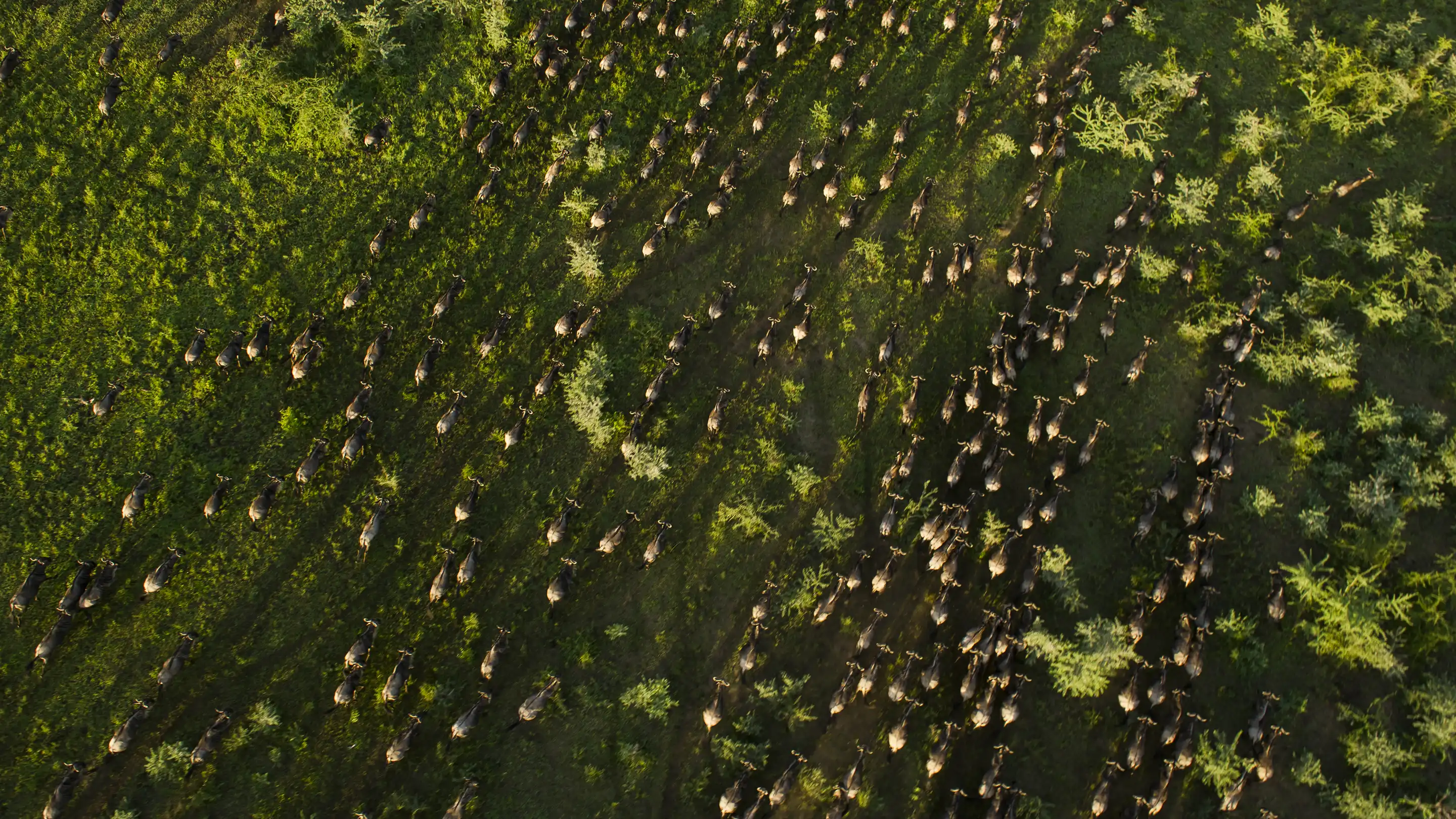
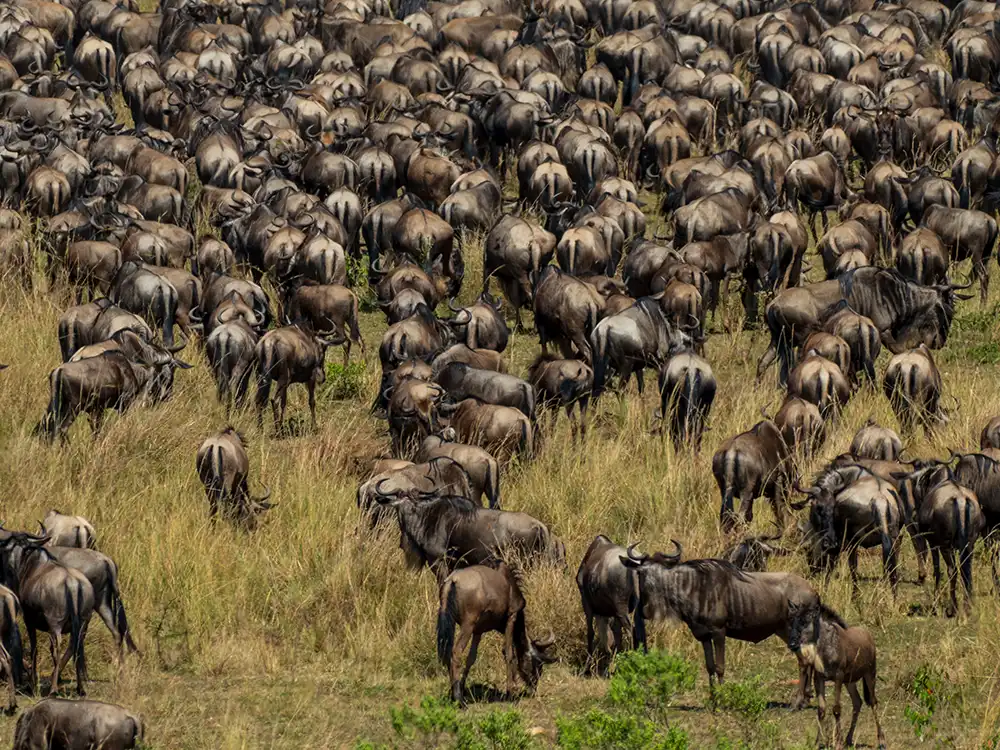
Nothing prepares you for your first glimpse of the mega-herds: millions of wildebeest, zebras, and Thompson’s gazelles stretched beyond the horizon. Their collective movement created clouds of dust that hung in the air and a low rumble that echoed across the plains.
During the course of the migration, over 1.6 million wildebeest, 300,000 zebras, and thousands of other wildlife flow across the landscape, moving in a 1,800-kilometer clockwise circuit etched in their DNA. My guide explained that the zebras don't accompany wildebeest by chance — they prefer the longer grasses that grow after wildebeest have cropped the shorter ones.
What struck me most was the sheer scale of this spectacle: since its first official documentation in the 1960s, when herds numbered around 300,000, the Great Migration has grown to over 1.5 million strong.
Following the rains: A year-long journey
The Calving Season (January-March)
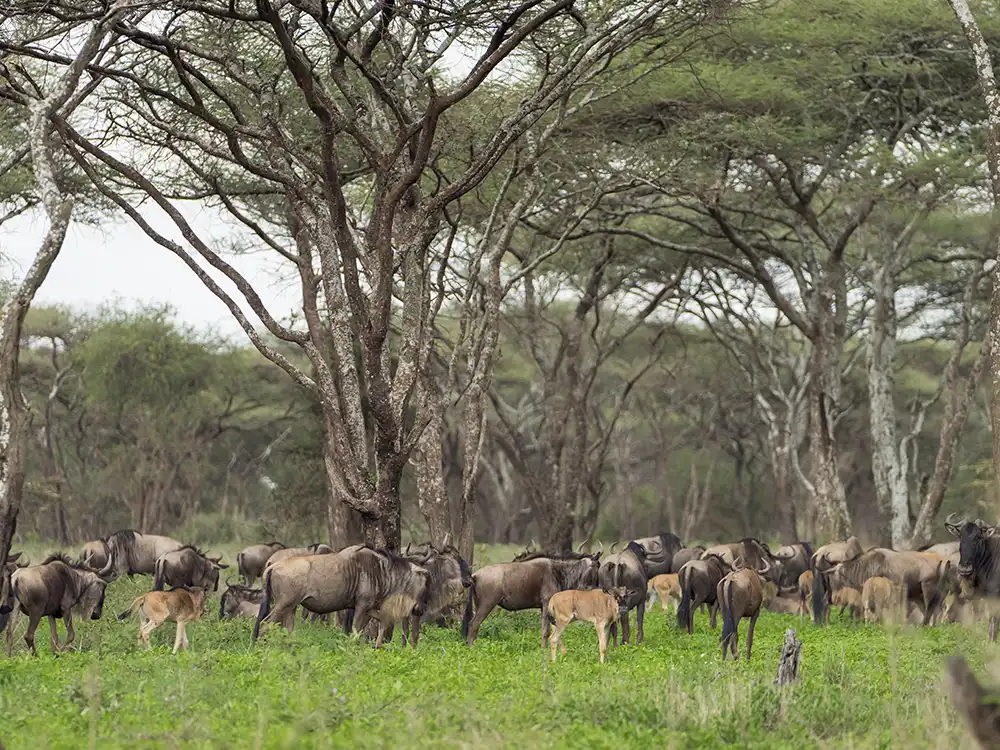
I first encountered the herds in the short grass plains of the southern Serengeti and Ndutu plains. Here, nutrient-rich grasses thrive in soil made up of volcanic ash from the Ngorongoro Crater's eruptions over two million years ago.
During the calving season, approximately 8,000 wildebeest calves are born every day, their mothers cleaning them with urgent tenderness. My guide explained this wasn't random; all births occur within a concentrated three-to-four week window in February. "Evolution's clever strategy," he noted. "Is to overwhelm the predators with abundance."
Predators arrive. Lions, leopards, cheetahs, and hyenas gorged themselves on the vulnerable young, yet over 500,000 calves survived to join the great journey north.
Legendary Songa Migrational Camp was my base for the calving season. The camp’s position within Legendary Expeditions’ exclusive-use protected wildlife area bordering the southern Serengeti gave me the freedom to watch the herds in seclusion — far from the crowds that frequent the national park.
Located in the nearby Mwiba Reserve, Legendary Mwiba Lodge is another option for those looking for seamless access to the calving season.
The journey northwest (April-June)
April's long rains triggered the herds' journey through central Serengeti toward the Serengeti’s remote western corridor. The scale is unimaginable as kilometer-long columns of wildebeests and zebras funnel in a northwesterly direction across the Ndoha and Dutwa plains.
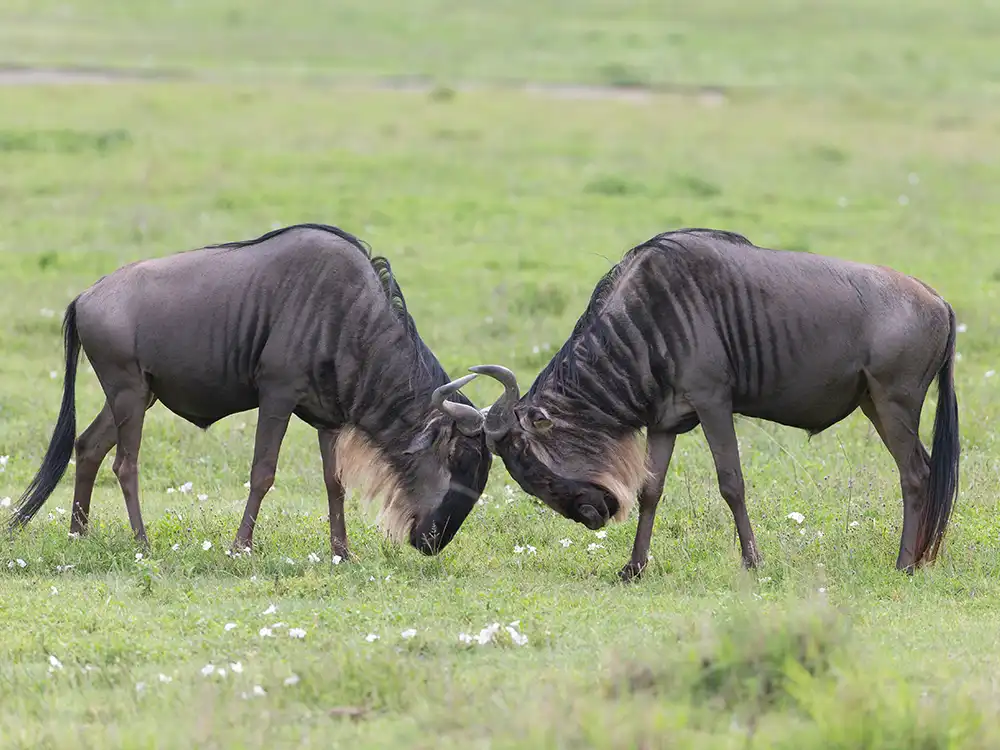
At the banks of the Grumeti River, I witnessed my first wildebeest taken by a crocodile – a preview of the dramatic Mara River crossings to come. June also marks the start of the rutting season, and the air thrummed with testosterone-fueled competition.
From my base at Legendary Mila Tented Camp, which is positioned in the heart of the western corridor, I was well and truly immersed amid the herds. The camp’s location — short drive from the Grumeti River — meant we never had to go far to watch the action.
The Mara River Crossings (July-October)
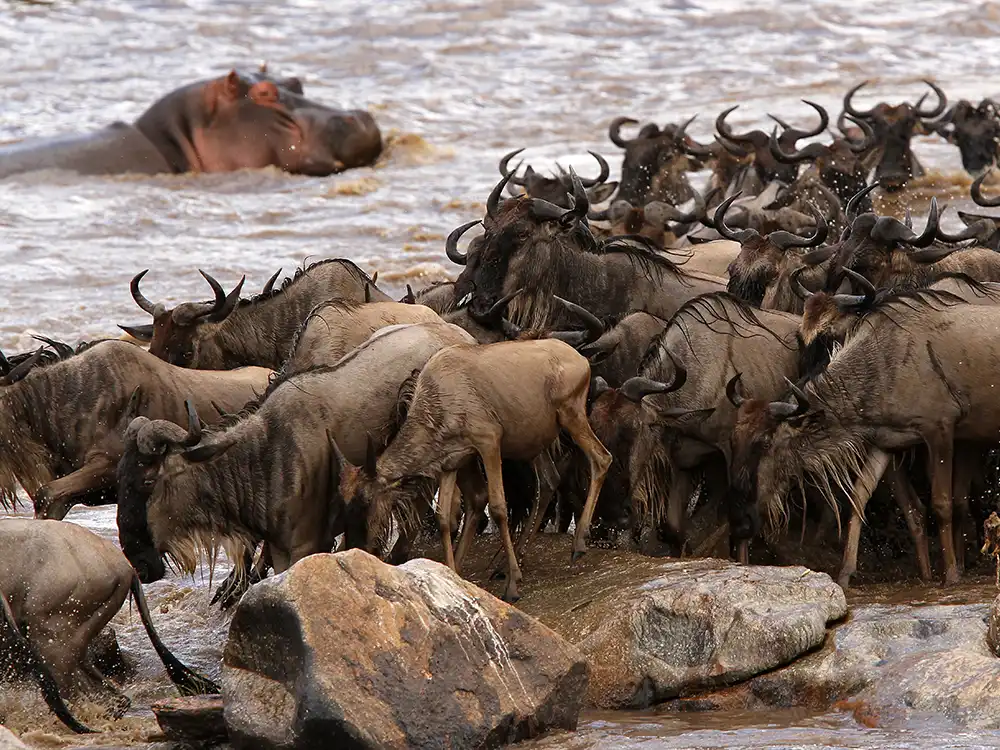
The adrenaline-pumping drama of the Mara River crossings is a sight to behold. Positioned near the banks with my guide, I watched as the herds gathered, contemplating the crocodile-infested waters ahead. The tension was palpable: thousands of animals pressed together, the bravest occasionally approaching the water's edge before retreating.
Then, as if triggered by some invisible signal, it began. The first wildebeest leaped, then hundreds followed in a thunderous cascade of hooves and spray. Below, massive crocodiles waited with prehistoric patience. Some animals made it across; others didn't.
My guide explained that the river crossings occur over several months, at multiple crossing points along the banks of the Mara River, sometimes even multiple times a day. Ebbing and flowing with the tide of herds as they journey north, he explained that a single crossing can number in the thousands or just a handful of stragglers braving the dangers that lie in wait.
Staying at Legendary Nyasi Tented Camp in the Lamai Wedge, I was able to head out to the Mara River at a moment’s notice to witness the crossings. Positioned on the Kogatende side of the Mara River, Legendary Songa Migrational Camp is another option for travelers wanting to experience the drama of the crossings up close.
The journey home (November-December)
November's short rains heralded the herds’ journey home, as they crossed the perilous waters of the Mara River once more before heading south through the eastern Serengeti to Seronera plains. By late December, my guide explained, they would return to the Ndutu plains for calving season, completing their circuit.
A symphony of survival
The Great Migration isn't just about animals moving across a landscape. It’s the circle of life laid bare on an immense scale, from a calf's trembling first steps to the moment when instinct overcomes fear at the river's edge.
While 500,000 calves are born annually, approximately 250,000 adults perish during the migration. Here, amid the endless plains of the Serengeti, death and birth dance together in an endless cycle that has played out for millennia.