A new chapter for our Legendary safari experiences
Legendary Expeditions and Chem Chem Safari have joined the Auberge Collection, uniting nine exceptional properties across Tanzania’s most iconic wildlife destinations under one visionary new brand: Auberge Safari.
For travelers and trade partners, this means the same True. Wild. Free experience you know and trust, now seamlessly connected in an unrivaled portfolio of luxury safari camps and lodges.
As Auberge Safari takes flight, Legendary Expeditions is stepping into a new role as your premier partner for Auberge Safari journeys, crafting extraordinary experiences across northern Tanzania — and beyond. Return on June 1, 2026 to find out more
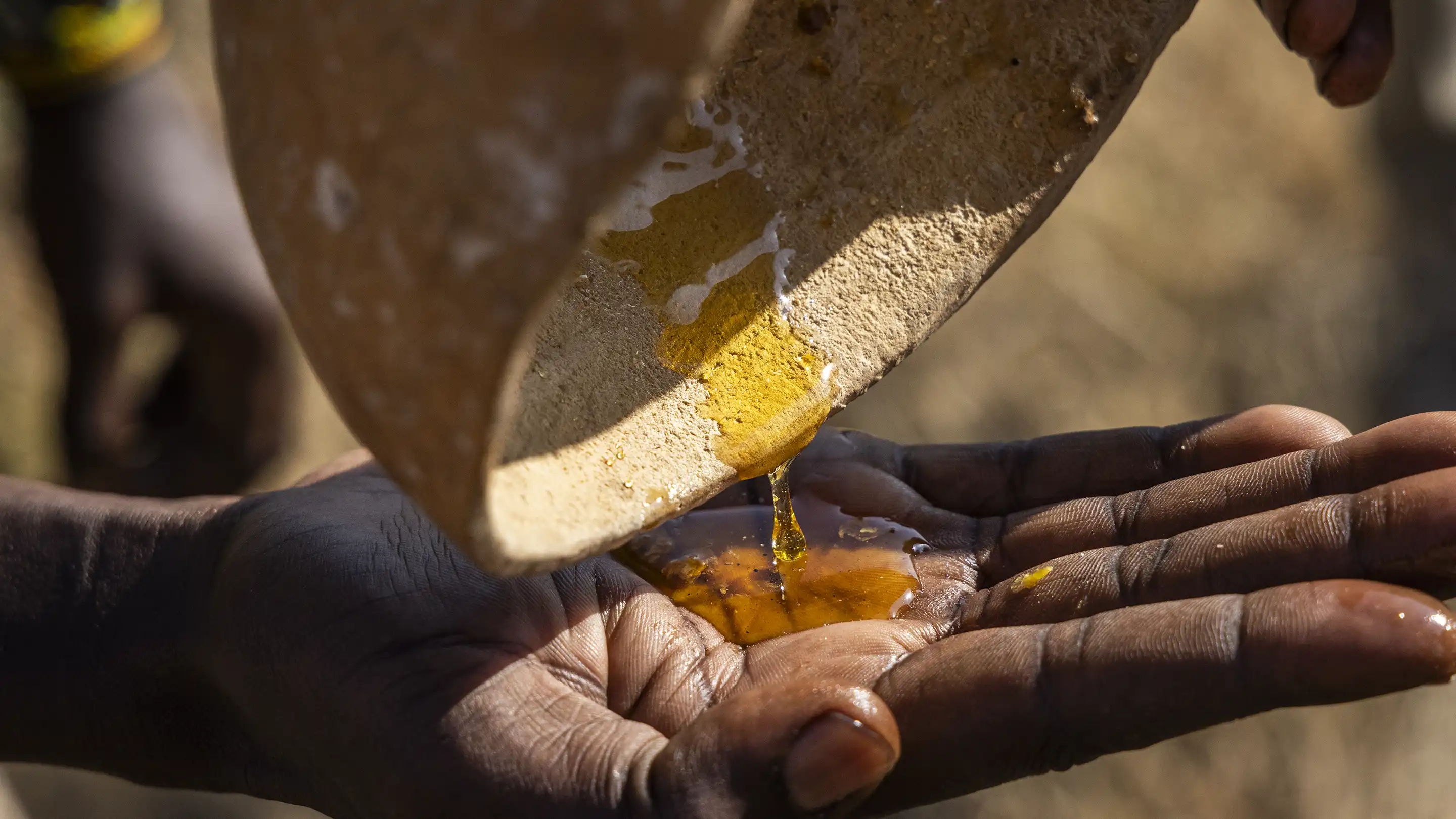
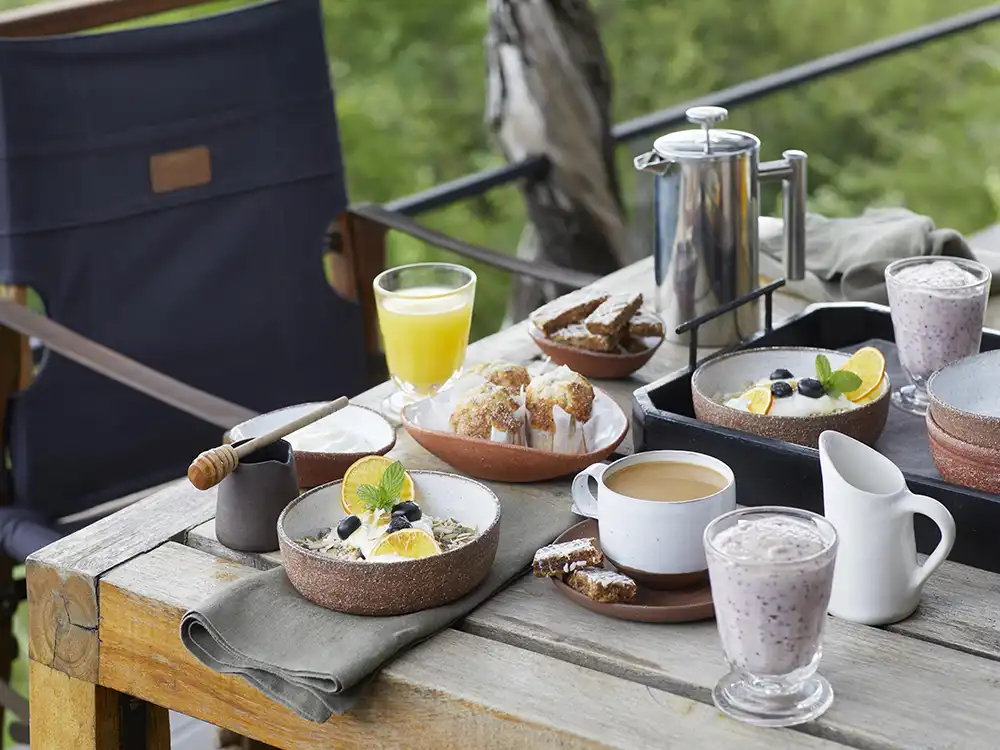
It was my very first morning at Legendary Lodge, as I tucked into a sumptuous spread of freshly baked pastries, homemade yogurt, granola, and juicy fruit, that I had my first taste of Legendary Honey. “The honey,” my waiter explained as I drizzled the golden liquid over my yogurt, “comes from our apiaries.”
He went on to explain that Legendary Honey is the product of a groundbreaking beekeeping conservation project spearheaded by the philanthropic and conservation arm of Legendary Expeditions, the Friedkin Conservation Fund (FCF).
The benefits of beekeeping
My journey into the story of Legendary Honey took me to Legendary Mwiba Lodge, where, deep in the wilderness of Mwiba Reserve, this ambitious project took root in 2023.
When I arrived at Mwiba, I was struck by its remoteness. Far from Tanzania’s bustling towns and cities, the region is sparse with few income opportunities. "Before the bees," a member of the FCF team explained, "desperate times made people turn to activities like poaching and illegal logging to put food on the table."
He went on to explain that Legendary Honey is the product of a groundbreaking beekeeping conservation project spearheaded by our affiliate, the Friedkin Conservation Fund (FCF), a non-profit organization focused on impactful philanthropy and conservation initiatives throughout Tanzania.
A hive of activity
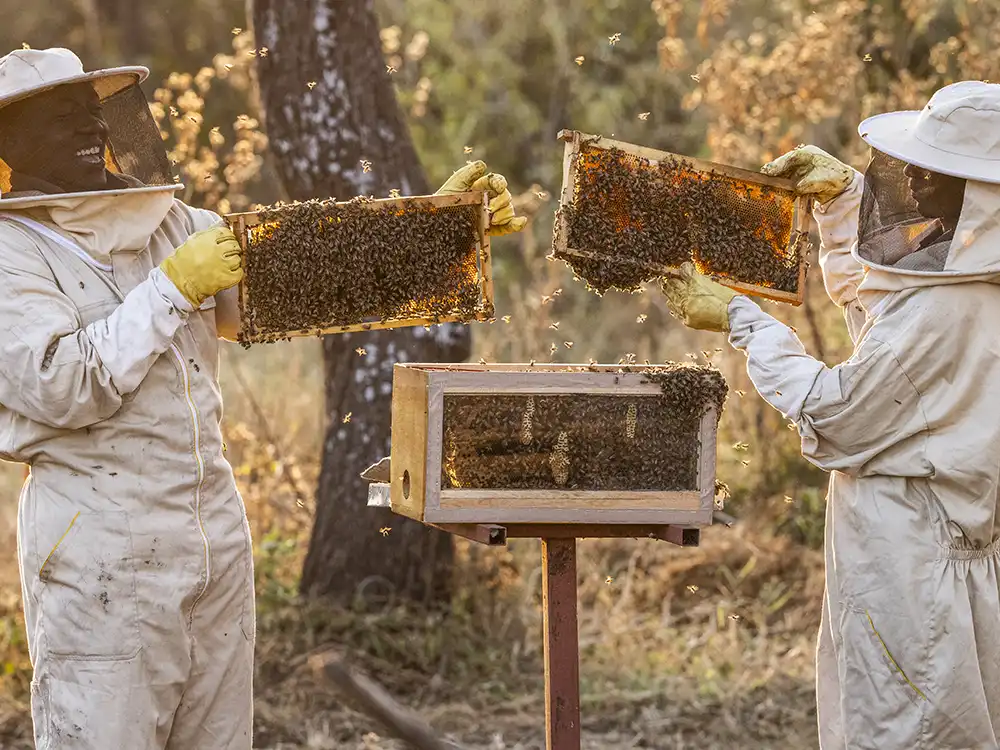
When I arrived at Mwiba’s apiary, it was a hive of activity — and not just of bees at work. A group of beekeepers, men and women from the nearby Makao Village, had geared up as they prepared to harvest honey. As I watched the beekeepers move methodically from hive to hive, I gained a deeper understanding of the project.
The first hives were built at Mwiba Lodge and Legendary Lodge in 2022. These pilot hives served as demonstration sites where FCF began training community members in the art of beekeeping. "First, we learned the basics," one beekeeper explained, adjusting his protective gear with practised ease. "Tools, safety, how to read the hives' moods."
Under the guidance of qualified trainers who understood both the technical aspects and cultural context of rural beekeeping, the beekeeping conservation project began to grow. According to one of the local trainers, the project has grown to encompass:
Honey production and processing.
Advanced harvesting techniques that maximize yield while protecting the colonies.
Wax collection and processing for additional income.
Perhaps most importantly, trainer development programs that transform students into teachers.
Buzzworthy impact
The numbers of this African beekeeping project tell a remarkable story of growth and empowerment: in 2024 alone, 1,443 kilograms of golden honey were harvested, which was an incredible 69% increase from the previous year. The honey’s journey from hive to my breakfast table generated $10,000 in direct income for the beekeeping groups, transforming their lives and those of their families.
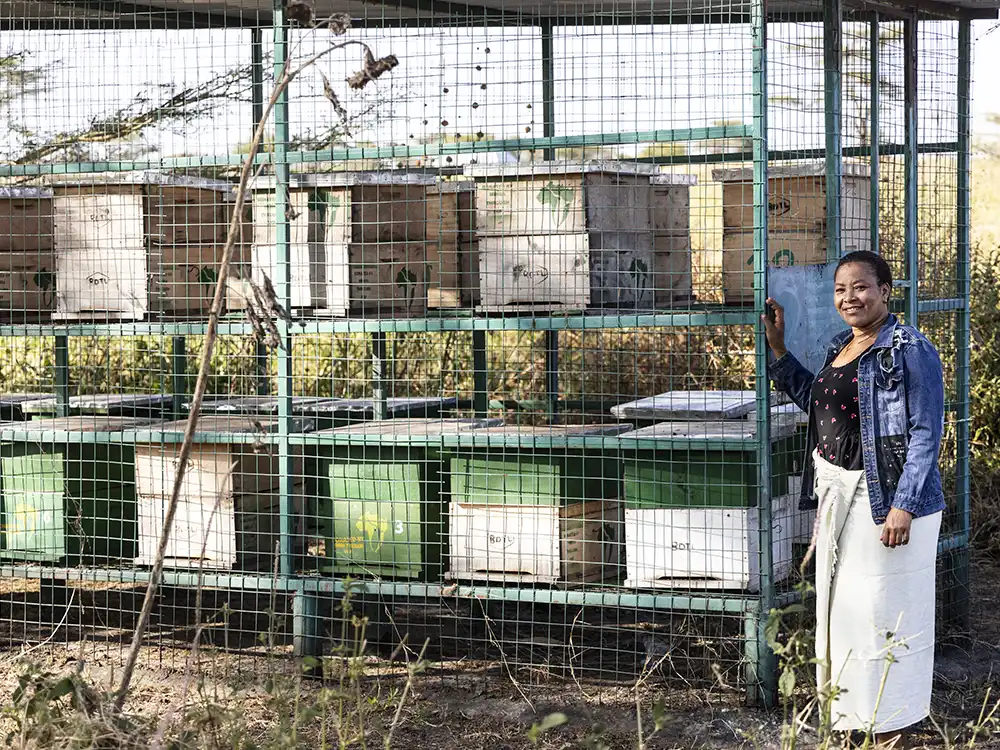
The project has grown from strength to strength, with three apiaries — one at Legendary Lodge, one at Mwiba Lodge, and one at Makao Village — and 200 hives under its belt. “We’re currently working to expand the project,” explained a member of the FCF team, “By introducing business skills that will transform our beekeepers into genuine entrepreneurs.”
The upcoming training, which will cover financial management, marketing strategies, market access, and value-added opportunities with by-products, aims to nurture sustainable businesses that can generate income for generations to come.
Women breaking barriers
During my time at the apiaries, I was amazed at the number of women involved in the project. “Of the 214 community members we’ve trained so far,” one of the trainers explained, “101 of them have been women.” It became evident that this project was about far more than just bees — it forms part of a broader effort to break barriers in what was traditionally a male-dominated practice.
"The bees taught us something important," one of the women in gear explained with a smile. "Success comes from working together, not from keeping others out." It became clear that the project’s focus on women's participation has created a welcome ripple effect: women in local communities have been empowered not only to generate income and help support their families, but to seize new opportunities.
Field notes
Every drizzle of golden honey is a celebration of the success of this legendary African beekeeping conservation project. A project that, as I witnessed firsthand, demonstrates something profound about the potential of conservation: when communities can generate sustainable income from healthy ecosystems, they become the most effective guardians of those systems.
The women and men I met aren't just beekeepers – they're entrepreneurs, teachers, and conservation champions whose success challenges traditional assumptions about rural development.